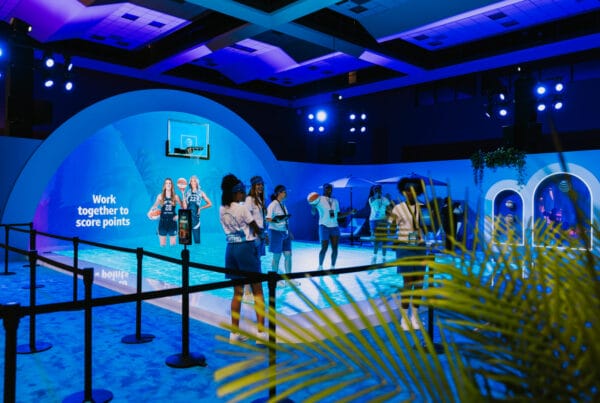
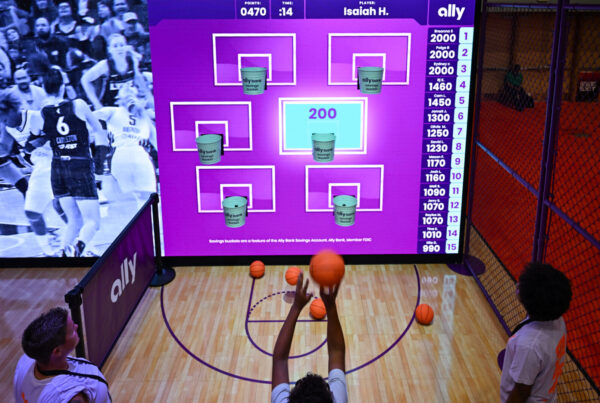
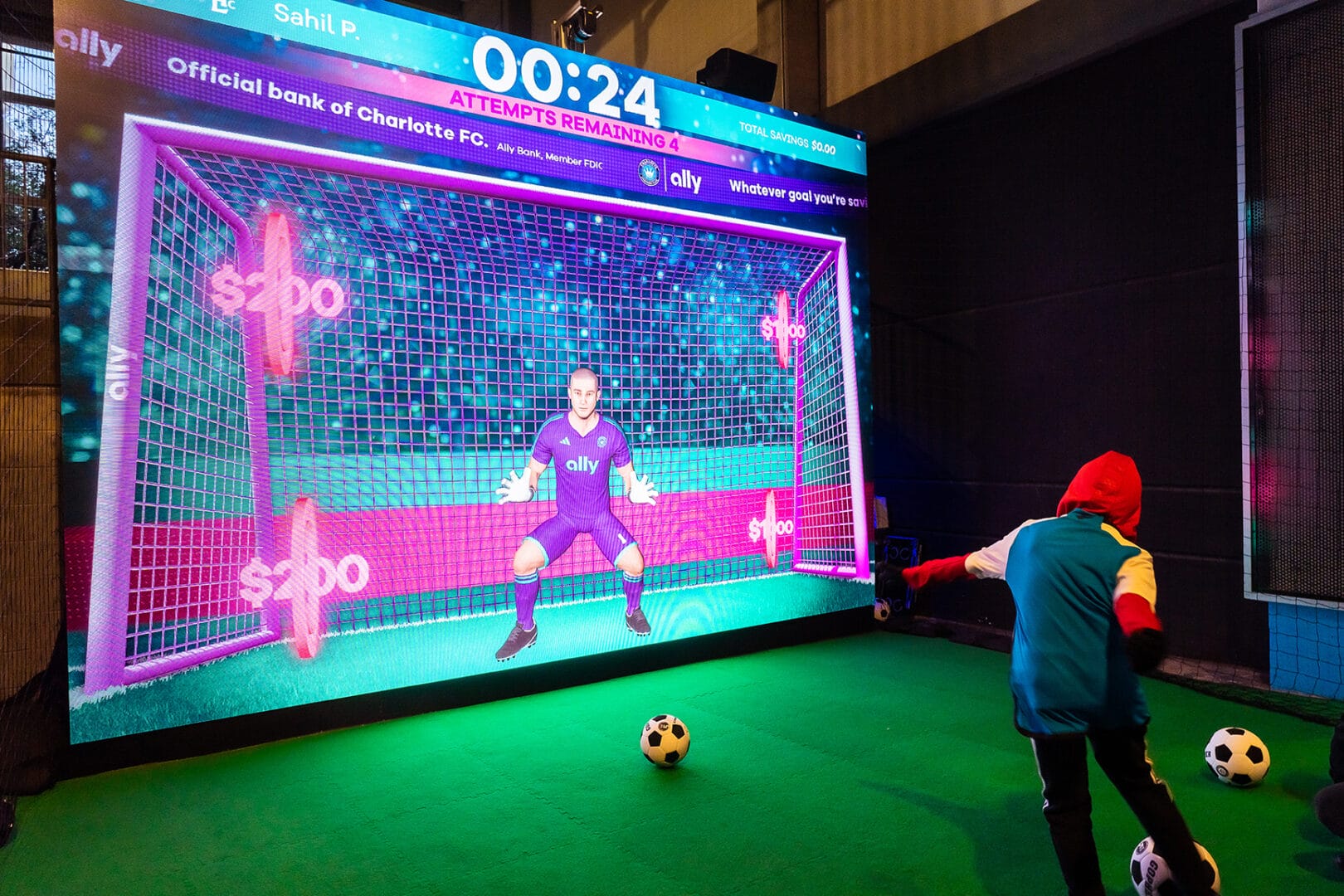
A live brand experience can take many forms: a sponsored event, a product demonstration, a pop-up or a hands-on brand activation. Whatever the format, its value may go beyond immediate sales. It can change how people see a brand, let them try a product, create useful customer interactions and give the brand a reason to follow up.
So if you judge an experience only by how many attendees become customers, you’re counting just one part of its return.
The Sensory Storytelling ROI Report brings six potential returns into the same calculation. Five represent spending the brand may no longer need to make. The sixth is new revenue from customers the experience produces.
Six ways a live brand experience can return value
- Brand lift: If the experience improves brand awareness or perception, estimate what it would cost to reach that audience through targeted media. Count the value only when the experience replaces media the brand would otherwise buy.
- Product trial: Put a value on the opportunity to try the product by comparing it with what a sampling program would cost.
- Research interaction: Attendee responses and interactions can provide insight the brand might otherwise commission research to collect. Estimate that value against the cost of equivalent research.
- Customer retention: An experience can deepen relationships with existing customers. The report cites research indicating that retaining a customer costs five to seven times less than acquiring a new one.
- Earned social: Attendee posts and shares can extend an experience’s reach. Estimate their value against what the brand would pay creators for comparable reach.
- Conversion revenue: Follow up with contacts captured during the experience, then measure the revenue from the customers who convert.
The first five are displaced spend: money the brand may not need to spend elsewhere because the experience delivered a comparable outcome. Conversion revenue is new money coming in. To keep the estimate grounded, count displaced spend only where the brand would genuinely have made that investment.
Why conversion shouldn’t carry the whole case
Conversion matters, but it can be an incomplete way to judge a live brand experience. In the report’s modeled example, a $1 million activation season reaches 16,000 participants. The example assigns $912,000 in value to the five displaced-spend streams before counting any conversions. With the example’s conversion assumptions, conversion revenue adds $480,000.
Together, those figures produce $1.392 million in total return against the $1 million activation cost. In that scenario, conversion alone falls short; the combined value clears the cost.
These figures come from a modeled scenario, not an observed campaign result. The report uses stated assumptions and published rates to demonstrate the calculation, and says brands should replace working estimates with their own figures. Its 1.4 to 4.5 times return range is modeled the same way.
Start with the conversion rate you need
You don’t have to guess at conversion to begin evaluating an experience. Start with figures your team already knows: activation cost, expected attendance and customer value.
Break-even conversion rate = activation cost ÷ (attendance × customer value)
The result is the share of attendees who would need to become customers for conversion revenue alone to cover the activation cost.
For example, the report’s flagship scenario uses a $950,000 activation and 4,000 attendees. If a customer is worth $15,000, the required conversion rate is about 1.6%. If a customer is worth $2,000, it rises to about 11.9%. The same experience can have very different economics depending on customer value.
Try the break-even calculation
Use the calculator below to estimate the conversion rate your activation would need to break even on conversion revenue alone. Then consider how the five displaced-spend streams could change the full return.
Suggested calculator inputs: activation cost, expected attendance and customer value. Output: break-even conversion rate.
Scope for all six returns
The inputs for this calculation are spread across teams: attendance and participation data, customer and contact records, customer value, media costs, research budgets, sampling costs and creator rates. Brands can bring those figures together before committing to a live experience and replace estimates with their own where available.
That’s the practical case for scoping an experience against all six returns instead of conversion alone. Decide what it should deliver, what it can replace, what information to capture and who will follow up. Then measure the full picture.
Read the Sensory Storytelling ROI Report for the research, assumptions and calculation behind the framework
Create an Experience Designed to Be Measured
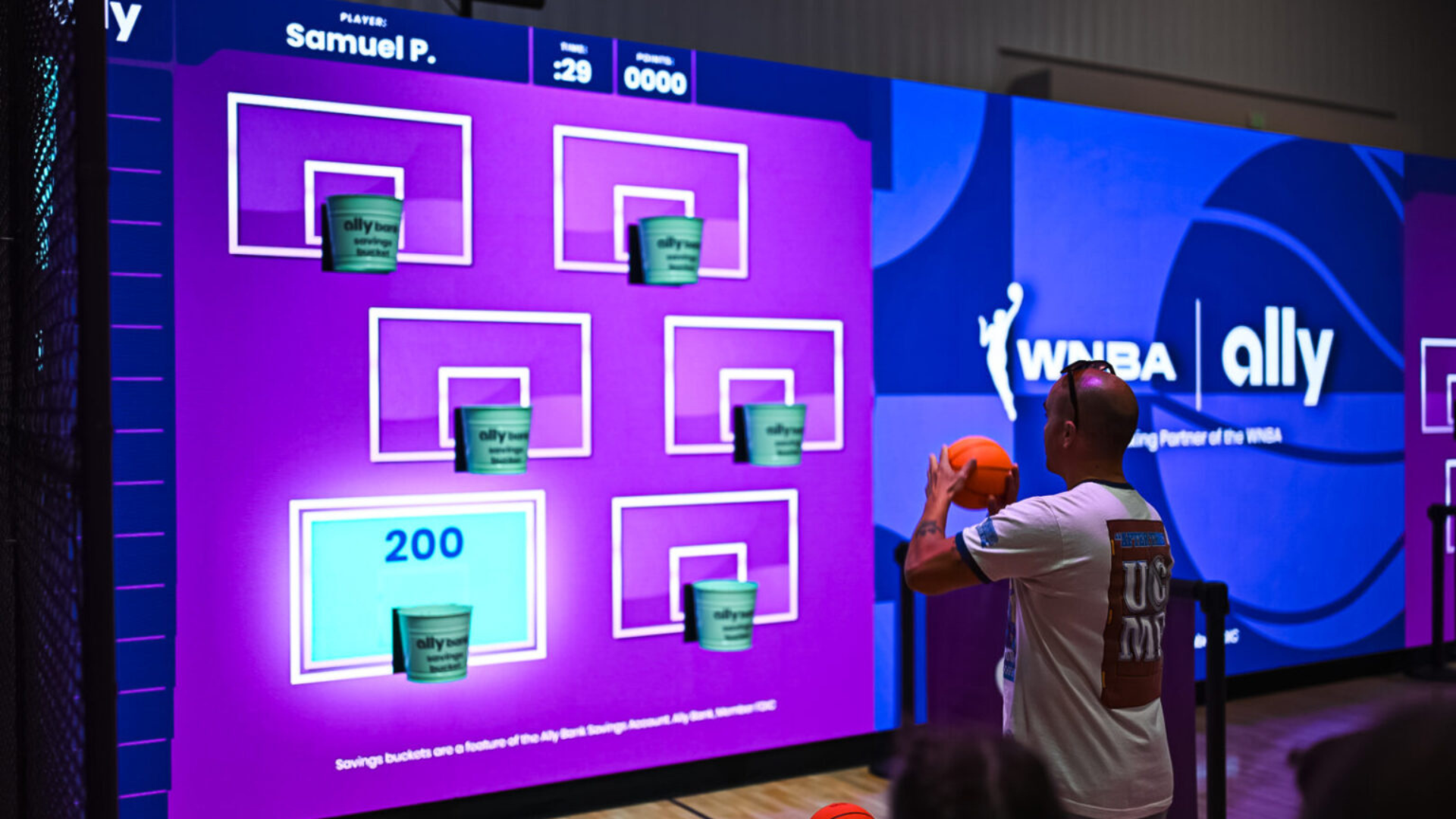 A measurable activation starts with the right questions. What should the experience deliver? What information will help show its impact? How will the brand follow up with the people who take part?
Bluewater’s team considers those questions as we design and build brand activations, bringing creative, technology and production together around the goals of the experience. If you’re planning a live brand experience, talk with our team about creating something engaging, purposeful and measurable.