
Before an activation can influence how someone thinks about a brand, it has to be seen. That means winning attention twice: once before the event and again after attendees arrive.
First, the brand must choose the right event while the audience decides whether it deserves a place on their calendar. Once onsite, the activation must give people a reason to choose it over everything else competing for their time.
These decisions happen at different moments, but both affect whether an activation has an opportunity to deliver results. Section 05 of Bluewater’s Sensory Storytelling ROI Report examines how those choices are made and where the industry’s measurement currently stops.
 The First Challenge: Earning Attendance
Brands have more opportunities to participate in than their budgets can support. Before a creative brief is written, someone must decide which events are worth the investment.
That decision can depend on whether the expected audience matches the brand’s target market, what participation will cost, what the brand already knows about the event and whether direct competitors will be present.
The audience is making its own decision at the same time. Attending a conference, trade show or incentive program often means weighing the experience against other opportunities, work responsibilities, travel demands and the cost of attending.
The level of commitment can make a noticeable difference. Published benchmarks cited in Bluewater’s Sensory Storytelling ROI Report place no-show rates for free events between 40% and 60%, compared with attendance rates of 90% to 97% for paid events.
Conference attendees also consider more than the agenda. Research identified six factors that influence attendance decisions:
- Personal and professional development
- Networking
- Cost
- Location
- Time and convenience
- Health and wellbeing
Of those factors, networking and cost predicted whether delegates intended to attend again.
The effort to earn attention begins well before anyone steps inside an event. A strong program may still struggle if the location, cost or time commitment makes attendance difficult. An appealing destination or a valuable networking opportunity, however, can help an event earn a place on an attendee’s calendar.
Earning a Place on the Calendar is Getting Harder
Forrester has tracked the business-to-business event market across three consecutive annual surveys. The research found that the effort to attract attendees was intensifying. It also reported that overall event satisfaction fell 8% between 2024 and 2025.
The decline does not prove that events are becoming less effective. It does show that expectations are changing. Audiences have more choices, and simply holding an event does not guarantee their participation or satisfaction.
Brands and event organizers must give people a clear reason to attend, especially when asking them to commit time, travel and money.
The Second Challenge: Earning Attention Onsite
Getting someone through the doors only wins the first decision.
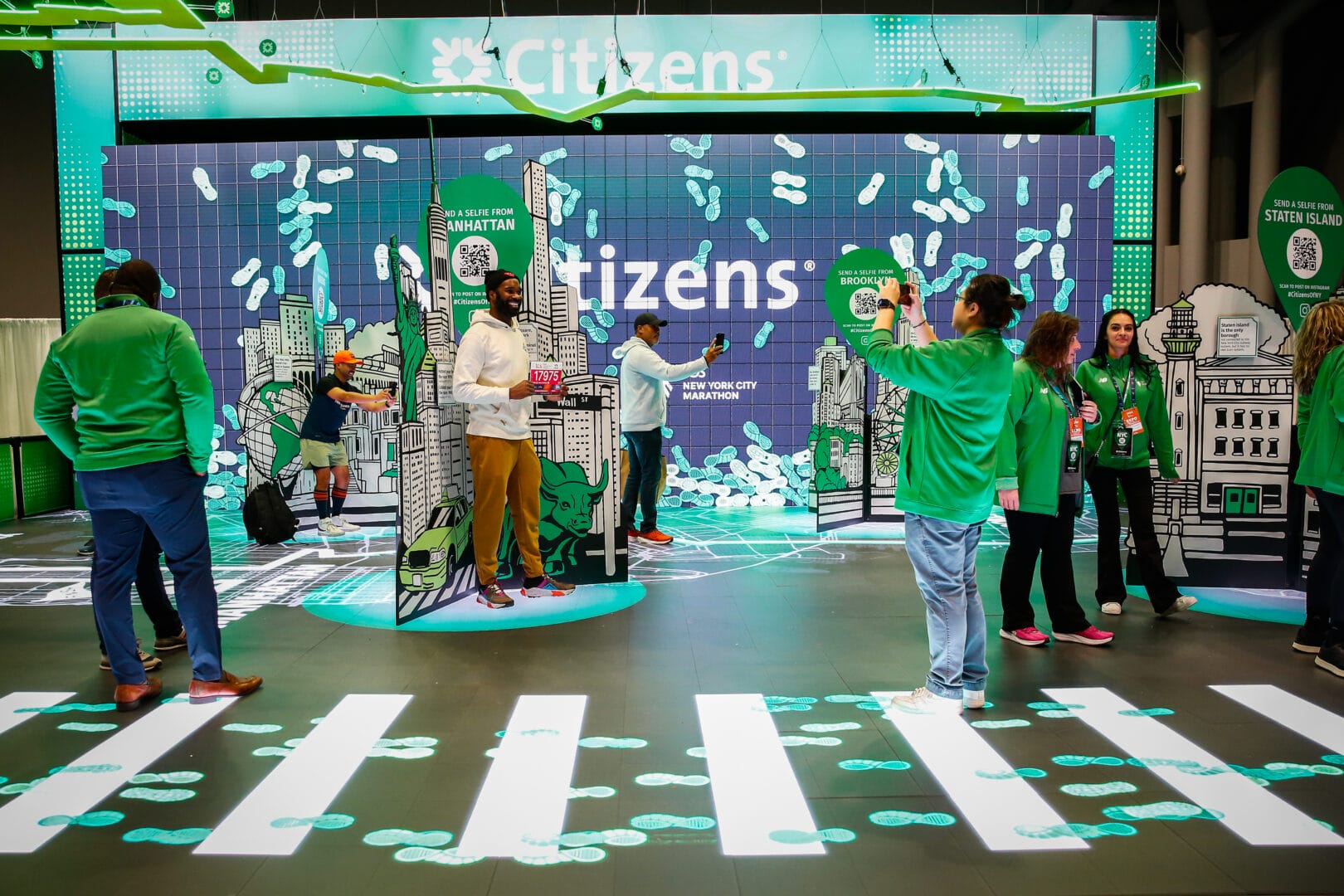
Once attendees arrive, every activation is competing for a limited number of hours. Visitors must decide whether to engage with a particular brand, explore another experience or focus on the event itself.
In Bluewater’s Sensory Storytelling ROI Report, fabrication owner Le Tate described how brands evaluate their performance on the event floor:
“Each show, every brand is there looking at each other, kind of scoping out the competition.”
A line at a neighboring activation is visible to every brand nearby. So is an empty footprint. Those observations can influence how companies think about the following year’s build and budget, even when no formal measurement is taking place.
Brand recognition also changes the equation. A well-known brand may be able to create a simpler experience and still attract visitors based on its name. A brand without that level of recognition must earn attention through what it puts in front of people that day.
That does not necessarily mean building the largest or most elaborate footprint. It means understanding what will make the intended audience stop, participate and choose to spend part of their limited time with the brand.
Multiple Brands, One Show Floor
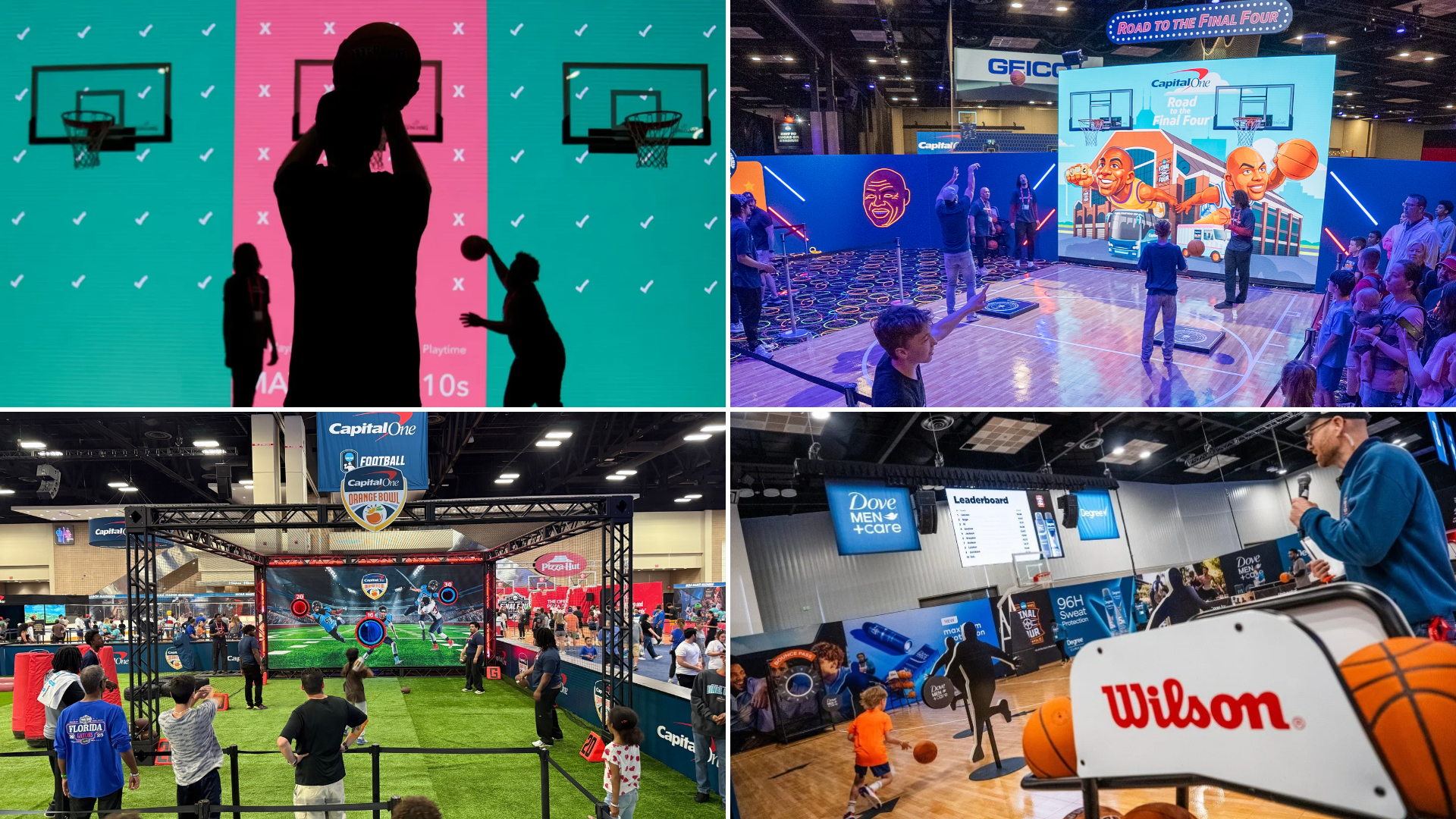
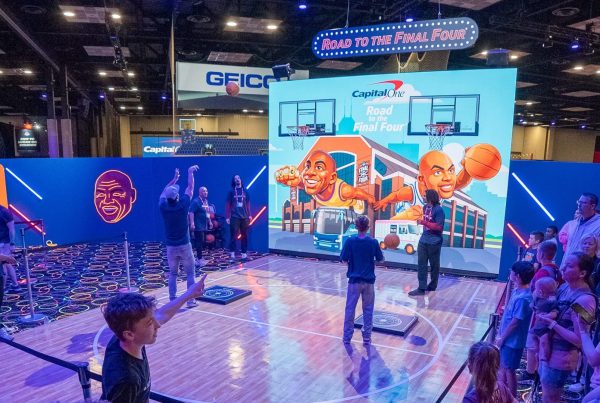
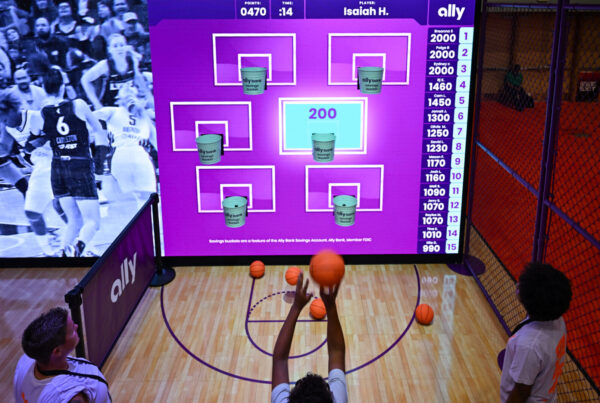
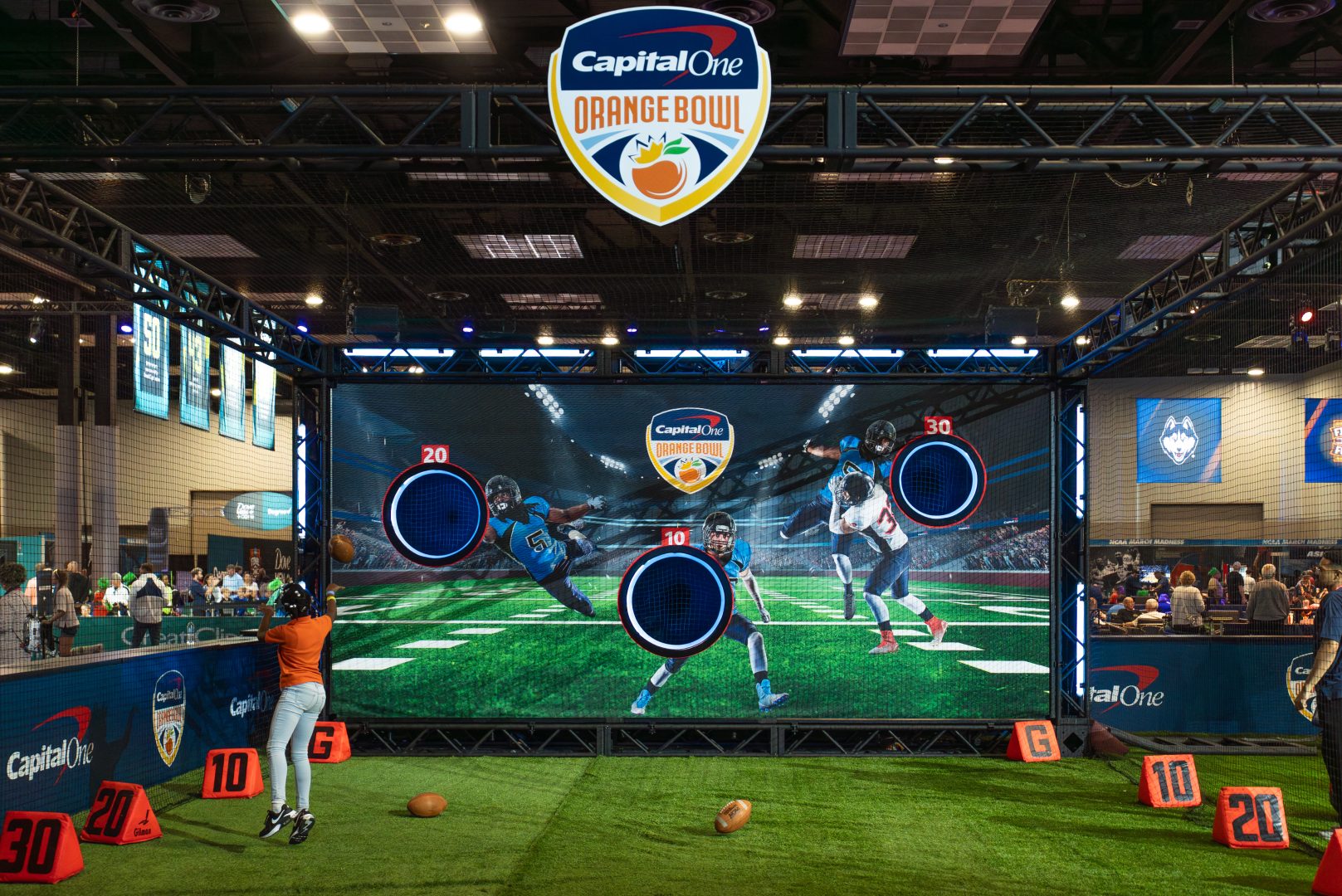
A recent Bluewater project provides a useful example of this dynamic in practice. Bluewater partnered with Solomon Group to support activations for TurboTax, Capital One, Dove, Degree and Great Clips at the NCAA Men’s and Women’s Final Four Fan Fests.
Each brand gave fans a different reason to stop and participate. The experiences included custom games, sports challenges, real-time leaderboards, a digital queue, interactive photos and onsite services. While the executions differed, each was designed to help the brand stand out and turn spectators into active participants.
This case study illustrates the second choice identified in Bluewater’s Sensory Storytelling ROI Report. Once attendees enter a shared event environment, every brand must give them a reason to spend some of their limited time within its footprint.
The Attention Gap
Despite the importance of this second choice, it remains largely unmeasured.
Research shows that no published source measures how attention is divided among competing activations at the same event. None of the research participants measured it either.
Brands can see where people gather, but they may not know why one activation earned attention while another was passed by. This leaves a meaningful gap between what brands observe onsite and what they can demonstrate afterward.
Choosing the Event is only the Beginning
An activation cannot create an impact if the right audience never encounters it. That makes both decisions important:
- The brand must select an event that reaches the right people at a workable cost.
- The activation must give those people a reason to choose it once they arrive.
Property selection determines who has the opportunity to encounter the experience. Creative and experience design help determine whether they stop and engage.
Both decisions influence the potential return. While one determines whether the right audience encounters the activation, the other determines whether people choose to engage once they arrive.
To learn more about the decisions that shape attendance, engagement and return, explore Bluewater’s Sensory Storytelling ROI Report.