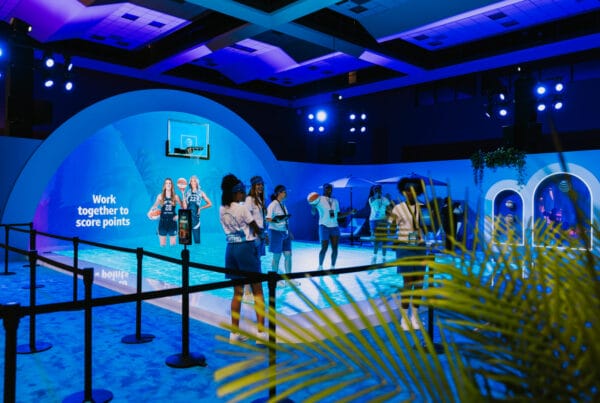
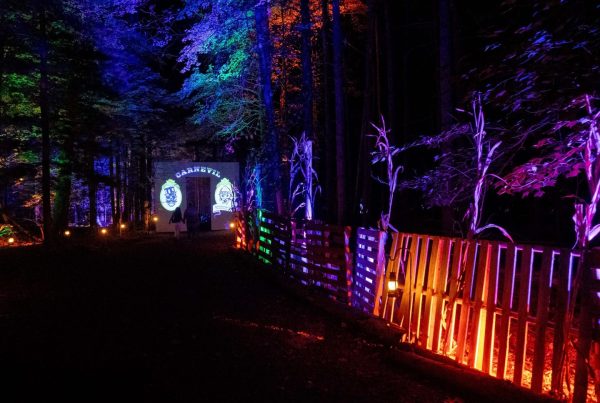
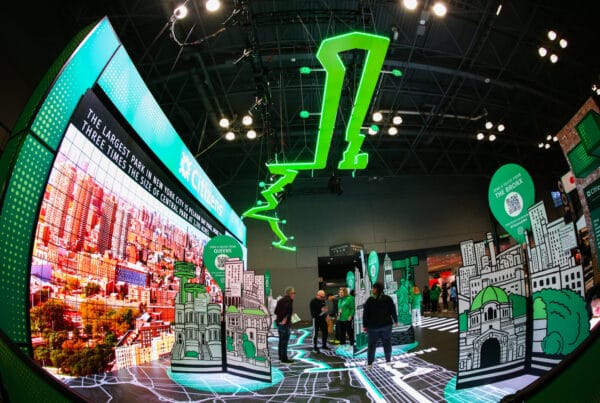
A successful trade show environment may only exist for a few days, but bringing it to life can take months of strategy, design, engineering, fabrication, content development, and planning.
Before attendees ever step into the finished space, teams work through ideas, layouts, technical requirements, brand standards, and countless details behind the scenes.
At Bluewater, trade show design and execution is a collaborative process that connects creative ideas with real-world production.
One recent example is the Ram Professional exhibit at Work Truck Week, created in partnership with Stellantis. From early 3D concepts to the finished show floor, the project shows how a trade show environment evolves from an initial idea into a fully realized brand presence.
 Step 1: Understanding the Vision and Scope
Every successful trade show environment starts with understanding the goal.
For the Ram Professional exhibit, the Bluewater team first learned the project scope and reviewed what had been done at the event in previous years. The team discussed lessons learned, goals for the new experience, required products and elements, and the booth’s location within the show hall.
Major moments also had to be considered from the beginning. These included a press conference and vehicle reveal.
This discovery stage helped establish a foundation before the creative process began.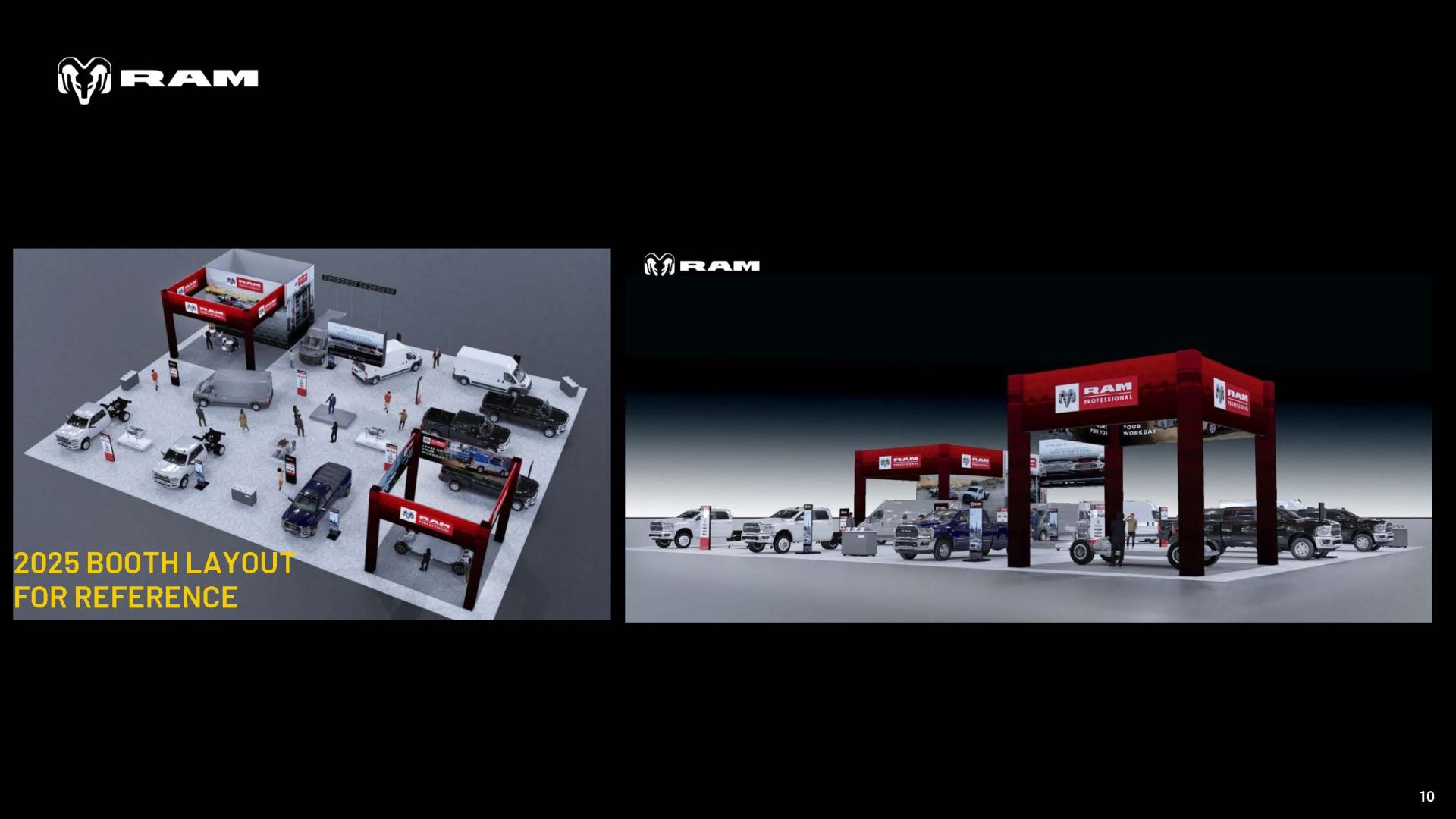
Step 2: Building the Creative Foundation
Once the project goals were established, the creative team gathered the materials needed to begin trade show design and development.
That included reviewing brand standards, foundational creative materials, product information, and available 3D vehicle models.
These resources helped the team understand both the creative possibilities and the boundaries of the Ram Professional brand.
Rather than jumping directly into a polished design, the process began with exploration.
Step 3: Exploring the Experience in 3D
The first 3D layouts were intentionally rough.
Designers created white models, early screenshots, and multiple layout options to explore how the exhibit could function within the available space.
Different ideas were considered for major statement pieces, structural elements, and large-format LED displays.
At this stage, the goal was not to create the final answer. It was to test possibilities.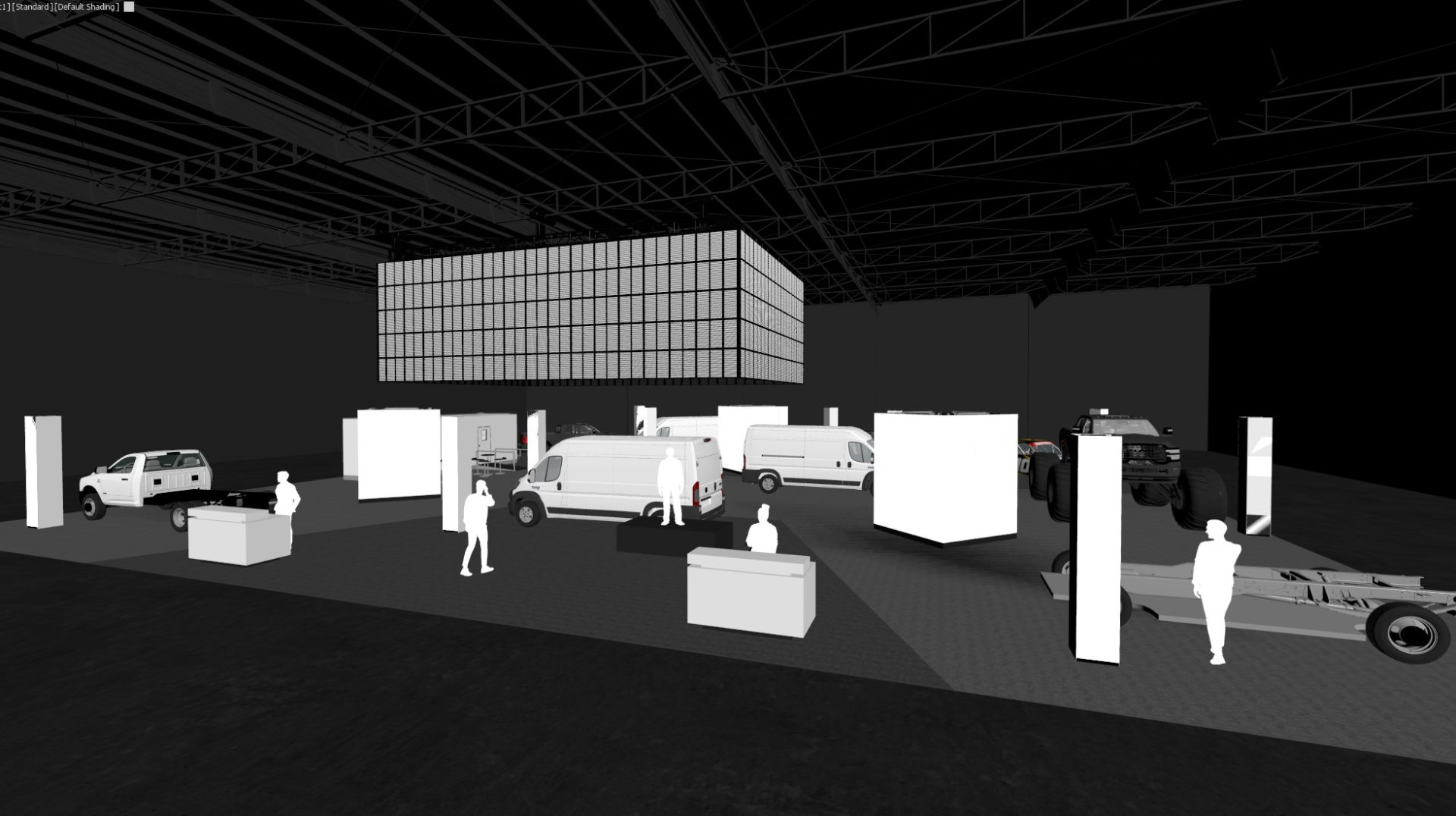
This part of the process is especially important for trade show environments. A design has to do more than look good on a screen. It must account for how people move through the space, where vehicles and structures will sit, what attendees will see from different angles, and how technology fits into the environment.
Step 4: Refining the 3D Design
From there, the team moved into design development.
The initial concepts went through multiple iterations as the layout became more defined. Elements were adjusted, repositioned, removed, or expanded as the team worked toward the final experience.
Each round helped answer another question.
How should the space flow? Where should the vehicles sit? What elements should command attention from across the show floor? How could LED technology support the brand story?
Through that process, the overall layout and visual direction began to take shape.
Step 5: Turning Concepts Into Final Renders
After the major design decisions were made, the team developed the final renders.
These detailed visuals showed what the completed Ram Professional exhibit was intended to look like before fabrication and installation began.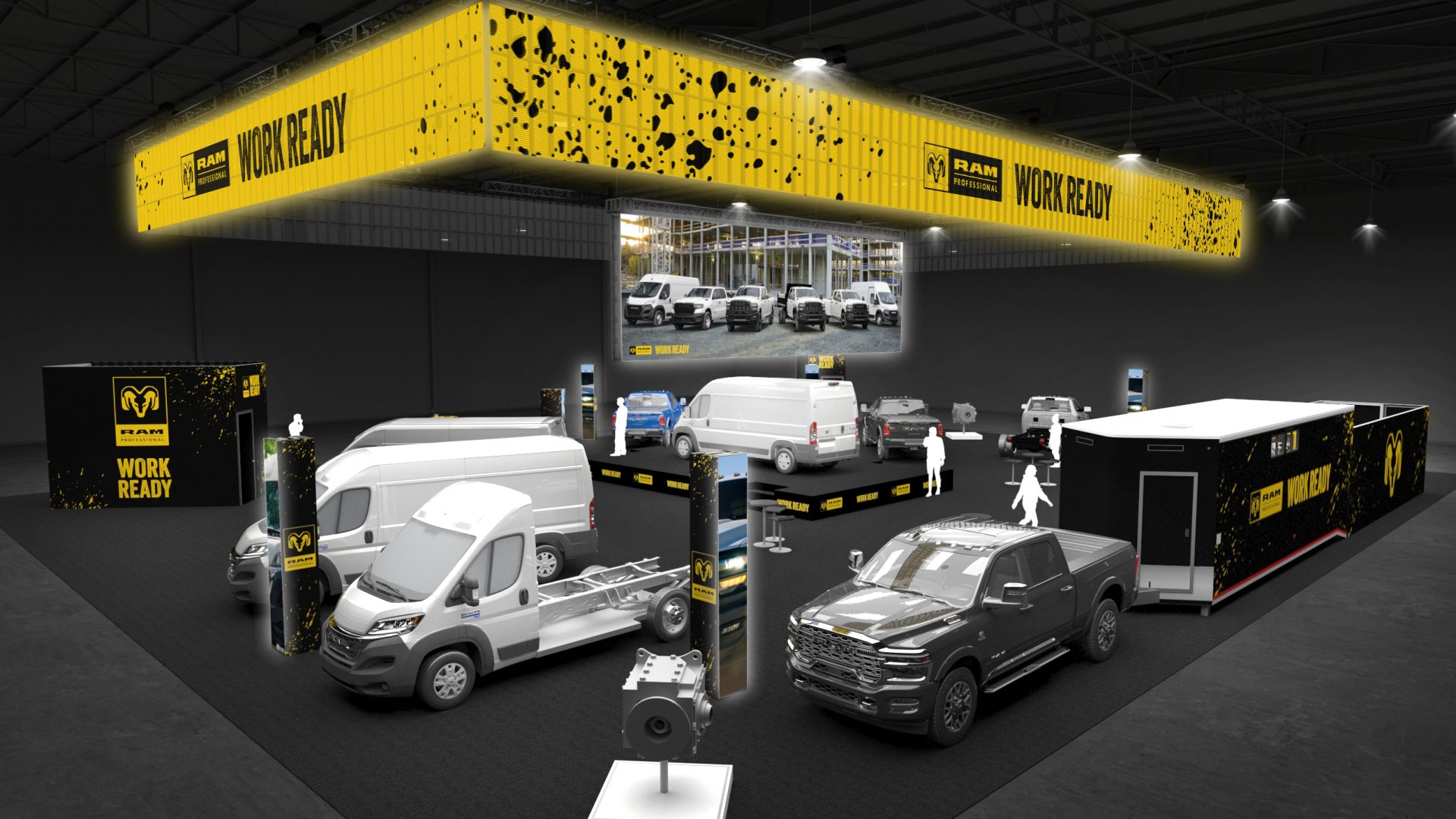
The final design included several large-scale elements, including a four-sided hanging LED banner, LED product and information displays, a double-sided presentation screen, vehicle displays, and custom meeting and hospitality areas.
These renders were more than presentation materials. They became an important bridge between the creative vision and the teams responsible for estimating, engineering, and building the experience.
Step 6: Designing for the Real World
A concept cannot stay a render forever.
Once the creative direction was finalized, the team prepared scaled views that estimators could use for pricing and build partners could reference during the next stages of production.
Engineering drawings brought another level of detail to the process.
These drawings accounted for:
- Electrical drop locations
- Carpet inlays
- Rigging pick points
- Truss layouts
- Vehicle positioning
- Furniture placement
- Structural positioning

This is where trade show design becomes increasingly technical. Every creative decision has to work within the realities of the venue, structural requirements, technology, safety, installation, and show operations.
The smallest details can affect how the final environment comes together.
Step 7: Developing Print and Digital Content
While the physical environment was being developed, the visual content also had to come to life.
The Bluewater team created 2D designs for printed graphics throughout the exhibit. Motion and digital content were also developed for the LED elements.
This content helped connect the physical structures to the Ram Professional brand. Instead of technology existing separately from the booth design, the displays, graphics, and structures worked together as one cohesive environment.
Step 8: Bringing the Design to the Show Floor
Eventually, months of planning had to leave the screen and enter the venue.
During onsite setup, the various pieces of the exhibit came together on the show floor. Structures were installed, technology was integrated, graphics were placed, vehicles were positioned, and the environment began to resemble the final renders.
This stage is where collaboration across disciplines becomes especially visible.
Creative, fabrication, engineering, technology, and production teams all play a role in translating the approved design into the physical space.
Step 9: Testing Before the Show
Installation is not the final step.
Before the exhibit opened to attendees, the team completed setup and testing to make sure the technology and content were working as intended.
That was especially important for the Ram Professional exhibit because the space supported a busy schedule of presentations, product discussions, guest appearances, and brand storytelling.
On peak show days, programming took place every 15 minutes. The technology had to support those moments consistently throughout the event.
Step 10: Seeing the Experience Come to Life
Then came the moment every previous stage had been working toward: show day.
The finished Ram Professional exhibit created a high-impact presence at Work Truck Week while supporting vehicle displays, live programming, customer conversations, and brand storytelling.
The completed environment featured a 30-foot by 50-foot four-sided hanging LED banner, seven 10-foot LED product and information displays, a 24-foot by 7-foot double-sided presentation screen, and custom meeting and hospitality spaces.
What attendees experienced as one cohesive environment was the result of many individual disciplines working together behind the scenes.
From Render to Reality
One of the most rewarding parts of trade show design is seeing how an early concept translates to the final environment.
The render establishes the vision. Engineering determines how that vision can work. Fabrication turns it into physical pieces. Technology and content add movement and information. Installation brings everything together.
When those stages align, an idea on a screen becomes an environment people can walk into and experience.
Bringing Trade Show Environments to Life
The Ram Professional exhibit demonstrates that successful trade show environments are rarely created by one discipline alone.
Strategy sets the direction. Creative teams visualize the experience. Designers refine the environment. Engineers solve technical challenges. Fabrication teams build physical elements. Content teams bring screens and graphics to life. Production teams install, test, and operate the final experience.
Each step builds on the one before it.
For brands, that integrated process can turn an initial idea into something tangible, memorable, and ready to perform in the real world.
Ready to bring your next trade show environment from concept to execution? Contact Bluewater today.